Saturday, 18 September 2010

NHS MMX

It is one thing to make spending cuts in order to reduce the deficit but another to use the current economic conditions to dismantle the welfare state and siphon off taxpayers’ money to fund NHS privatisation. 

The coalition's proposed NHS reforms will not save a single penny; instead it will add new layers of management as overworked GPs outsource responsibilities to private management companies with little or no experience of health service delivery. These companies will not have the interests of the taxpaying public or patients in mind, favouring instead their directors and shareholders, and so profits will take priority over patient health. 

As a result, the cost of the NHS will actually rise as the private sector takes control of more areas of NHS treatment management and delivery, which has clearly been the objective of the Tories for some time despite their protestations to the contrary. Effectively, bringing about privatisation by stealth. 

The coalition and the right-wing press may criticise the NHS, but it is already more cost-effiicient than many health services in Europe and the US, the latter costing double per capita to deliver a partial service compared to our universal service, largely because of their need for private profits. 

By following this model the Tories and their LibDem apologists are condemning the NHS to a similar fate. The clear danger of this covert privatisation process is that as private profiteering encourages costs to spiral, so pressure will grow to end universal health delivery, cutting the inflated costs of private health companies by eventually means testing and restricting free treatments, as has happened with dental health. 

No LibDem would surely have voted for this; but many are following the Tories blindly towards this calamity, trapped in a toxic marriage of convenience, and too scared to seek an annulment. 

As Clegg draws the LibDems deeper into the mire it is time for LibDem MPs and supporters alike to make a choice; to stay loyal regardless of the costs or stay true to their principles and help to fight back against the destruction of the welfare state, which both the Labour and LibDems have sworn to uphold. It is time to stop the bickering and fight - for if we don't, the things we hold dear, but often take for granted, will be no more and the damage may be irreversible.

Clegg: There is no future for us as a party of the left

Nick Clegg has declared that there is "no future" for the Liberal Democrats as a left-wing alternative to Labour, appealing to his party to show "patience" and maintain a united front with the Conservatives. He spoke to Andrew Grice of the Independent.

Nick Clegg - he's the one with the tie

On the eve of Liberal Democrat conference starting today, Nick Clegg promised his party it would reap the electoral rewards if it held its nerve about its slump in the opinion polls. He said: "There were some people, particularly around the height of the Iraq war, who gave up on the Labour Party and turned to the Liberal Democrats as a sort of left-wing conscience of the Labour Party. I totally understand that some of these people are not happy with what the Lib Dems are doing in coalition with the Conservatives. The Lib Dems never were and aren't a receptacle for left-wing dissatisfaction with the Labour Party. There is no future for that; there never was."

His comments suggest Mr Clegg is resigned to losing a section of his party's support after departing from the strategy of Charles Kennedy, who opposed the Iraq war. An Ipsos MORI poll this week showed Labour and the Tories neck and neck on 37 per cent with Liberal Democrats on 15 per cent, down from the 23 per cent they won at the May election. Some 32,000 people have joined Labour since May, including 10,000 who formerly supported the Liberal Democrats. Although 600 members have quit Mr Clegg's party, another 4,500 have joined.

Liberal Democrat Conference, September 2010

Saturday
6.30pm: Nick Clegg leads rally marking launch of Yes campaign for next year's AV referendum

Sunday
Morning: Speech by Danny Alexander, Chief Secretary to the Treasury
Afternoon: Clegg holds question and answer session with party members

Monday
Morning: Debate on motion opposing Coalition's free schools and academies programme
Afternoon: Keynote speech by Clegg

Tuesday
Morning: Clegg to fly to UN conference on the Millennium Development Goals in New York
Speech by Simon Hughes, deputy party leader
Afternoon: Speech by Chris Huhne, Energy and Climate Change Secretary
Possible debate on Trident nuclear weapons system

Courtesy of the Independent


UPDATE: Trade unions were today banned from protesting outside the Liberal Democrat conference which gets under way in Liverpool this weekend. Union leaders slammed the ban as “outrageous”. The Lib Dems denied the ban was at their request, claiming the police had made the decision on “safety grounds”.

The police said the area around the Echo arena is “not suitable for protest of any size”, although demonstrations were allowed outside the venue during last year’s TUC conference and the National Rail Conference. The protestors will be expected to demonstrate from  the entrance to Salthouse  dock, hundreds of metres away.

Liverpool Echo

Friday, 17 September 2010

Housekeeping tip: hide the tee

'Right-to-buy' council house policy reviewed to appease Lib Dems

The government has begun a review of the "right to buy" scheme for council house tenants, calling into question one of Margaret Thatcher's most vaunted policies as it reaches out to Liberal Democrat backbenchers ahead of their party conference. The Lib Dems have been told the Tory housing minister Grant Shapps is looking for ways to increase the stock available to the swelling numbers on the waiting list. Shapps, who will attend the Lib Dem conference, is aware its rank and file want action on issues close to their hearts in return for support for the coalition.


For the Lib Dems, "right to buy" removes thousands of houses from circulation and prevents councils from being able to allocate homes to those on the lists. Tenants who have lived in a house for five years or more are able to buy their home. But with 4.5 million people on council housing waiting lists (1.8 million households) and an average of over five years to progress through to the front of the queue, Lib Dems are pushing for a reform of the system. A review of "right to buy" did not feature in the coalition agreement and Shapps said he would be extending it when he was shadow housing minister before the election. 

Any attempt to end the scheme will alarm many in the Conservative party. However, Shapps is supported in his review by Downing Street. He is reported to be aware that cities such as Hull have many more council houses than demand and so may decide to leave right to buy in place but has been persuaded that rural areas can not afford to allow a sale of stock at a time of soaring demand for council houses. Shapps is also looking at allowing councils to borrow against the value of some of the houses they own and use those assets to build more homes.

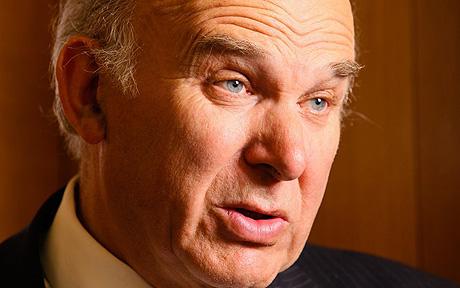
Vince Cable criticises temporary immigration caps

Vince Cable, the Liberal Democrat Business Secretary, has said that the UK's interim cap on immigration from outside the EU is damaging to British business.  He told the Financial Times that some companies were considering moving jobs abroad because they could not recruit the staff they needed.  Mr Cable said he backs plans for a permanent cap from next April but wants it to be more flexible. The Home Office said the temporary cap, introduced in July, still allowed the brightest and best to enter the UK. 


It was announced that Home Secretary Theresa May would limit the number of non-EU workers allowed into the UK to 24,100 - down around 5% - between now and April 2011. Mr Cable told the newspaper that under the current measure, some businesses could not bring in the skilled, professional staff they needed to expand. He said: "I was talking to people in the City and there were two investment banks that recruit hundreds of people from the non-EU area, Indians and Americans. They were allowed only thirty to forty. They have moved some operations to Hong Kong." 

Mr Cable added that he had a file full of examples of companies considering relocating jobs overseas because they could no longer bring in key staff and that was "very damaging" to British business. He said he did not dissent from the coalition agreement between the Conservatives and Lib Dems (which will see a permanent cap on non-EU immigration put in place from April), however he has campaigned for the cap to be applied flexibly so it can move up or down according to economic circumstances.

By criticising how this year's temporary cap is operating, Mr Cable is putting down a strong marker that he does not want the eventual limit on immigration to be set at too low a level. By speaking out ahead of the Liberal Democrat conference, he is likely to offer some comfort to those in his party who have been worried that Lib Dem ministers have not been doing enough to differentiate themselves from their Conservative colleagues.

TUC backs campaign to fight Royal Mail privatisation plans

A union campaign to oppose controversial government plans to privatiseRoyal Mail won the backing of the TUC today, setting the coalition on a collision course with millions of workers. On the closing day of the TUC conference in Manchester, unions unanimously backed an emergency motion from the Communication Workers' Union warning that hundreds of post offices would close and the universal postal service end if the business is sold off. The CWU will be targeting 71 key marginal parliamentary seats held by Conservative and Liberal Democrat MPs as part of its campaign after the business secretary, Vince Cable, appeared to confirm last week that there could be a total privatisation of Royal Mail – a move which goes further than previous Liberal Democrat and coalition promises. 


The CWU's deputy general secretary, Dave Ward, told delegates that putting Royal Mail into private hands would be a "disaster" for the service. "Royal Mail has a fully funded, successful modernisation programme and the stability of a three-year agreement with the union and workforce," he said. "Privatisation would be a disaster for the Royal Mail so backing from the TUC is important to strengthen opposition to this unpopular policy." The CWU fought off Labour's ill-fated attempts at a partial privatisation when it was in power, which were dropped last year by Cable's predecessor, Lord Mandelson, who blamed the lack of credible bidders for the proposed 30% stake.

Ward rounded on the previous Labour government for the "disastrous" way it had introduced competition into the postal industry, which he said had allowed competitors to take 60% of Royal Mail's profitable business. He said the threat of competition and Royal Mail's £8bn pensions deficit could be tackled without privatisation. He also claimed that the government is planning to take the £25bn of assets in Royal Mail's pension fund to deal with the deficit. "We have not gone through the painful barrier of modernisation to suddenly hand it over to private investors who will reap the benefits and attack our members' jobs," said Ward. 

Pope compares atheists with Nazis

"Even in our own lifetimes we can recall how Britain and her leaders stood against a Nazi tyranny that wished to eradicate God from society and denied our common humanity to many, especially the Jews, who were thought unfit to live. As we reflect on the sobering lessons of atheist extremism of the 20th century, let us never forget how the exclusion of God, religion and virtue from public life leads ultimately to a truncated vision of man and of society and thus a reductive vision of a person and his destiny."

Two old queens and a pair of ruby slippers - you couldn't make it up

Pope Benedict XVI made his remarks in his opening address to the Queen at Holyroodhouse in Edinburgh, less than one hour after stepping off the plane. A statement from the British Humanist Association said: "The notion that it was the atheism of Nazis that led to their extremist and hateful views or that it somehow fuels intolerance in Britain today is a terrible libel against those who do not believe in God. The notion that it is non-religious people in the UK today who want to force their views on others, coming from a man whose organisation exerts itself internationally to impose its narrow and exclusive form of morality and undermine the human rights of women, children, gay people and many others, is surreal."

Recommended viewing: The Trouble with the Pope, Channel 4

Thursday, 16 September 2010

Liverpool 4 - 1 Steaua Bucharest


Huge cultural shift needed in NHS childcare

A huge cultural shift is needed in the NHS in England to ensure children get the right care, a government-commissioned review says. The report, by Professor Sir Ian Kennedy, who used to lead the NHS regulator, said services were mediocre. He called for specialist training for GPs and extra investment in services. Particular attention also needed to be paid to transferring children into adult services between the ages of 16 and 18, Sir Ian said.

The review was commissioned following the case of Baby P. The toddler - subsequently named as Peter - had been seen by health services on 35 occasions by the time he died in 2007, aged 17 months and after suffering more than 50 separate injuries. This included appointments with GPs, health visitors and paediatricians as well as being seen at walk-in centres. The catalogue of abuse he suffered emerged during a court hearing in 2008 that led to the conviction of his mother, her boyfriend and their lodger for causing his death.

This review was ordered last autumn by the then Health Secretary, Andy Burnham. Sir Ian said there were a large number of areas that needed significant improvement. He said most GPs had not had paediatric training and therefore A&E had become the "default option" for parents with ill children. He also complained about the lack of coordination and information sharing between different parts of the health service. One parent told the review that in the 18 years of caring for a disabled child she had never once been seen by more than one consultant despite being under orthopaedic, neurological, spinal and general paediatric teams.

Investment was also highlighted as a problem. The NHS budget stands at £110bn, but the government estimates just £6.7bn of the figure goes on children and young people. The report highlighted one case where a child was released from hospital, but despite needing a £2.50 plastic feeding tube, there was a dispute over whether this would be funded. The NHS and social care teams responsible then accrued costs of £20,000 before an out-of-court settlement. Sir Ian concluded there were too "many barriers" hampering care which had left a "sea of mediocrity". "These myriad systems can make life impossible for the children, young people and their families who desperately need the services that the NHS exists to provide." 

Health Secretary Andrew Lansley said the findings laid bare the "true scale" of the problems, which he said he was determined to address. He also published a detailed document setting out how he wanted services to change under his proposals to set up GP consortiums to take control of the NHS budget. This included better monitoring of the results of care, more choice and more involvement in the design of services. The Royal College of Paediatrics and Child Health said: "This is a crucial document for the future health of children and is particularly important given that the recent government health white paper has little to say about children."

Sir Ian's review is not the first time NHS procedures have been reviewed. Last year the Care Quality Commission carried out a review of child protection procedures following the Baby P case. It concluded the NHS risked missing another abuse scandal because of gaps in child protection. It identified a lack of training, poor monitoring and high workloads. That review came after the regulator had already looked at the role of the NHS organisations that came into contact with Baby P, saying they missed valuable opportunities to save his life.

BBC News

BBC freezes television licence until 2013

There will be no increase to the TV licence fee in 2011 after the BBC Trust offered to freeze it at £145.50 for the next two years. Culture secretary Jeremy Hunt said he was "pleased" with the proposal and that the government had decided to implement it next year. A decision about 2012/13 will be taken at a later date, he added. If fully implemented, the two-year freeze will create an estimated £144m shortfall in the BBC's budget.


Under the terms of the current multi-year settlement, the BBC is entitled to increase the licence fee in 2011 and 2012 but has offered not to. In a statement, the Trust cited "the exceptional pressures that the current economic climate is placing on licence fee payers" as the cue for the move. The Trust asked BBC bosses in June to analyse the corporation's budgets and assess whether short-term savings could be made. Earlier this month the executive reported back, saying any alterations to the current arrangement would require on-air changes.

Sir Michael Lyons, chairman of the Trust, accepted that a freeze in income would "not be pain-free" and that the decision "was not taken lightly". However, he said the Trust was satisfied "the BBC can manage the impact while continuing to deliver the range of programmes and services that the public loves". Mr Hunt said he had "made it clear that the BBC needs to take proper account of the current economic climate. This move, which comes with the Trust's assurances that it will not significantly impact on the quality of services provided to licence fee payers, will be welcomed by the public."

The announcement comes at the end of a turbulent week for the corporation that has seen Sir Michael Lyons announce he will be stepping down and BBC One controller Jay Hunt leave to take a job at Channel 4. The BBC is also facing strike action from staff over proposed changes to its pension scheme.

Planetpmc welcomes the pope

This morning, Pope Benedict will fly from Rome to Edinburgh where he will meet the Queen and take part in the St Ninian's Day Parade through Edinburgh, travelling in the Popemobile. Then it's off to Glasgow to celebrate mass in front of 100,000 people, during which he will have to suffer Susan Boyle's singing not once, but twice. That is surely enough to guarantee his passage to heaven. He will then fly to London to meet the staff of G.A.Y. before settling down for the night in one of the establishment's "VIP" rooms. 

His more flattering side

Over the next two days there's a few more masses, meetings with religious and political leaders, a trip to St Mary's College in Twickeham, a visit to an old people's home, an open-air vigil in Hyde Park, the blessing of a statue of "Our Lady of the Taper" (along with a mosaic of St David that the Welsh are bringing with them so as not to feel left out) before letting his his hair down with a quick sherry in one of the many bars around Vauxhall. Finally, the pope will travel to Birmingham to beatify Cardinal Henry Newman [has anyone told the Pope that Newman was gay? Just a thought - Ed], before flying back to Rome.

The government is picking up the tab for policing all state visits. All other costs, including travel and accommodation, will be split between the taxpayer and the Catholic church. The original bill to the government was estimated at £8m; that had risen to £12m in August and may rise still further to near £20m. There are also concerns that the Catholic church is struggling to raise the £8m it requires for the pastoral elements of the visit. Presumably it's a bit late in the day to ask for a loan from the Vatican Bank – one of the wealthiest private banks in the world, although one that has recently come under scrutiny by Italian financial authorities over accusations of money-laundering. So this may be a bad time. Then again, with Berlusconi as prime minister ...

The pope is as catholic in his prejudices as he is in his faith. Never a shrinking violet even before he was elected to the papacy in 2005, he has managed to insult just about every one. He's pissed off Jewish people by considering Pius XII, the wartime pope who refused to condemn the Nazis, as a candidate for beatification; he's said the prophet Muhammad had brought the world "things only evil and inhuman"; and he doesn't even really consider Protestantism a proper religion. Then there's homosexuality, women's rights and Aids – Benedict's not at all keen on the first two, and promotes the latter with his opposition to the use of condoms. And whereas he doesn't really approve of paedophilia, he's been accused of covering up crimes committed by Catholic priests. And if he hasn't got round to anything you care about yet, just give him time.

If you would like to join in the event at Hyde Park, London, you can find details here.

Arsenal 6 - 0 Braga

It was one of those Arsenal matches, wasn't it? An absolute joy to watch. Wilshere didn't score but he assisted in two and was pivotal in the centre. Man of the match? Oh, I think so.

More pics at

Wednesday, 15 September 2010

Some mothers do 'ave 'em

The Pope won't be wanting for company on his trip to the UK. Rarely is Pope Benedict seen abroad without his dashing private secretary Georg Gänswein, a German-born priest and respected theologian who is the darling of the Italian media thanks to his rugged good looks. Dubbed "Bello Georg" - Gorgeous George - the fifty-three year old has been pictured playing tennis and flies aeroplanes in his spare time [sounds dead butch - Ed].

The heavenly threesome: Bertone, Gänswein and Brenda

Donatella Versace was so taken by Monsignor Gänswein's elegant looks that she once designed an entire range of clothing with him in mind. But he seldom speaks publicly. In 2006, he issued a rare statement criticising a series of satirical sketches of the Pope on Italian television. "Satire is fine," he said. "But these things have no intellectual quality and offend men of the Church." [Oh, well - Ed].

Pope Benedict speaks good English but Monsignor Leo Cushley, a former curate of Motherwell Cathedral, will be on hand for translation duties when needed. Cushley is now a senior diplomat in Rome and heads the Vatican's English sector. Francis Campbell, Britain's first Catholic ambassador to the Holy See since the Reformation, will also be on board.

The most senior cardinal to accompany Pope Benedict, meanwhile, is his close friend and fellow doctrinal conservative, Cardinal Tarcisio Bertone. The 75-year-old cleric is considered the second most powerful man in the Vatican. Earlier this year, the Catholic Church in England and Wales was forced to issue a rare statement publicly refuting comments from Cardinal Bertone, who had suggested that there was a link between child abuse and homosexuality. The Vatican's secretary caused outrage during a trip to Chile when he labelled homosexuality a "pathology" [he would know - Ed].

Manchester United 0 - 0 Rangers

 
That helped

Tuesday, 14 September 2010

Proposal to form Con/Dem pact at next election

Speaking yesterday on BBC Radio 4's Today programme, Tory MP Nick Boles said that the Conservatives and the Liberal Democrats should form a pact at the next election.

Rider on the storm

"The government is going to come under enormous pressure over the next few months and years and so what I'm saying is, if we've spent five years together governing, we've got the same record to defend. Surely it would make sense that in each constituency there's one coalition candidate who's representing everything that we've done and everything that we want to do over the following five years ... An electoral pact would make an enormous difference in making sure that every backbench MP, however small their majority, has an interest in sticking with the coalition until the election in 2015."

Such a pact between the coalition partners would have a clear benefit for the Conservatives, making a deal between Labour and the Liberal Democrats after the next election impossible. That is quite a prize for the Conservatives. It would mean that David Cameron would continue as PM as long as the two parties between them held a majority of seats in the Commons.

It is less clear, however, what the Liberal Democrats would gain from it. Yes, it would help more of their MPs survive, but it would tie their hands ahead of another hung parliament and massively reduce their ability to claim that they are a distinct political party rather than just an adjunct to the Conservatives.

Boles is a key figure in today's Conservative party and a member of the Cameron circle. That he is publicly floating the possibility of an electoral pact shows that it is a subject of discussion amongst those at the very top. Notably, David Cameron’s spokeswoman did not slap down the idea when asked about it later. Clegg’s people, on the contrary, are busy trying to pour cold water on the idea. 

 [I'll bet you a fiver he's the next communications director - Ed]

Cut the police at a time when civil disobedience is condoned by the unions? Are you mad?

Police should be protected from the worst of the government's cuts because of the risk that social and industrial tensions could fuel civil unrest, one of Britain's leading officers is to warn. The president of the Police Superintendents' Association is to tell ministers that a confident police force will be needed to tackle the disorder professionally, and with the minimum of force.

"Keep back or we unleash Andrew Lloyd Webber!"

Chief Superintendent Derek Barnett will tell Theresa May, the home secretary, that officers have been "surprised and disappointed" that the kind of ringfenced protection offered to the NHS is not to be extended to policing. He will also say that the public have a right to know the extent of likely cuts in policing, adding that those who dismissed the Police Federation's weekend claim that up to 40,000 frontline police jobs are at risk as "scaremongering" were being disingenuous.

"In an environment of cuts across the wider public sector, we face a period where disaffection, social and industrial tensions may well rise," says Barnett in his draft speech to the annual police superintendents' conference, which takes place in Cheshire. We will require a strong, confident, properly trained and equipped police service, one in which morale is high and one that believes it is valued by the government and public."

Barnett is careful not to predict that public sector spending cuts will directly lead to disorder on the streets. But his speech does underline the point that the coalition government has not given the police the kind of special protection afforded them by Margaret Thatcher which enabled her to rely on them during the 1980s inner city riots and the miners' strike that followed.

BBC unions set strike dates over pension changes

The BBC's main unions have announced strike dates in a dispute over proposed changes to the corporation's pension schemes.

The dates set are 5th and 6th October, which just happen to coincide with the Conservative Party Conference.


UNIONS

Brian Paddick launches legal action against the Met over phone-hacking

A former senior Metropolitan Police officer has issued judicial review proceedings against the force over newspaper phone-hacking claims. Ex-deputy assistant commissioner Brian Paddick says it failed to warn him his privacy may have been compromised. Mr Paddick, MP Chris Bryant, and writer Brendan Montague want the courts to rule on how the case was handled.

Brian Paddick

Tamsin Allen, a lawyer representing the three claimants, said: "Our clients have still not been told the whole story about how their names came to be in the papers seized during the phone hacking investigation in 2006 and why they were not warned that their privacy might have been compromised. The Court will now determine whether or not the Metropolitan Police breached its public law and human rights obligations in the way it handled this investigation and its aftermath."

Ms Allen, a partner at law firm Bindmans LLP, said she would shortly announce the names of two other people who would join the proceedings.

Monday, 13 September 2010

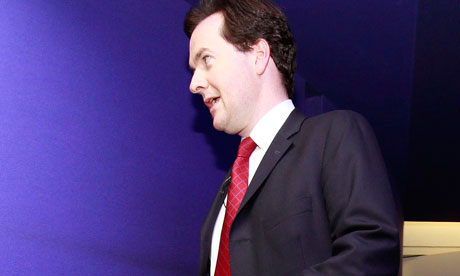
Osborne defends benefits cuts announcement

Chancellor George Osborne has defended plans to make further cuts to the welfare bill, saying current levels of spending on benefits cannot continue. He told MPs that further welfare cuts were needed to "take the pressure" off other government departments, which face cuts of between 25% and 40%. But he declined to say whether he was planning a further £4bn cut in benefits on top of £11bn already announced. Labour said the chancellor was "not being straight" with Parliament.


Mr Osborne came under fire last week after he told the BBC that welfare spending was "completely out of control" and suggested people making a "lifestyle choice" to live on benefits rather than trying to find work could find their support cut. He told the BBC last week that the Treasury could announce a further £4bn of welfare savings in next month's spending review on top of £11bn outlined in May's Budget.

Making an urgent statement in the Commons, Mr Osborne said welfare spending had increased 45% in the past 10 years and the government could not continue to spend one in three pounds of its total budget on welfare. Restating the coalition's goal of fundamental reform of welfare, he said rewarding work would be "absolutely central" to the plans but those genuinely unable to work would be protected. Although there would be "difficult" choices in the spending review, he said decisions taken would be fair to "different sections of society and different generations".